How did Pōpoloheno: Songs Of Resilience And Joy come to be?
Some years ago, after a dance workshop I conducted, I chated with one of the participants. This young lady had both African and Hawaiian ancestry. She expressed how happy she was to have me as a teacher, even for the one-time workshop experience, sharing that it meant a lot to her to have an instructor of African heritage. She went on to say that she had always been made to feel as if she was not “part” of the society she was born into in Hawaiʻi, because of her obvious African heritage (and by extension, because Black people were assumed to have not contributed anything of substance). We shared some experiences that we each had of living in Hawaiʻi and ofttimes feeling like outsiders.
Later on it got me to thinking, given what little bit I knew at the time about mariner activities in the 1800s, could it be possible that there was no African American presence in the history of Hawaiʻi since the time of first Western contact?
Fast forward several years and considerable research later, I came to understand that there indeed was a long history of Black people in Hawaiʻi. Itʻs just not well known. But why?
There of course are reasons for this oversight similar to what has happened (and is currently happening) in our society – the deliberate erasure from mainstream discourse of the African presence and diminishment of our contributions. But in Hawaiʻi, there is also a sense that what was really missing were the songs about the life and times of these individuals. As a hula dancer I know how important the mele (song) is to the continuation of culture and perpetuation of what is considered worth knowing. If you want something or someone remembered, commemorate that event or person in song. If the song is moving, someone will create a dance for it, and the story will live on.
And so, I developed the idea to create a collection of songs in honor of these individuals. There of course are so many notable people, more than we could accommodate for this round. But for whomever we could honor with mele inoa, I knew I wanted to have the very best composers involved. I started writing grant proposals to support this effort, and Pōpoloheno was born.
How did you two connect?
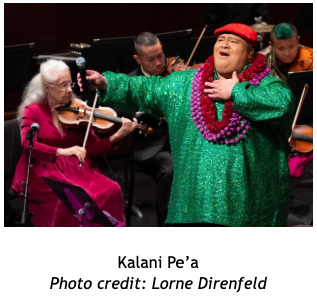
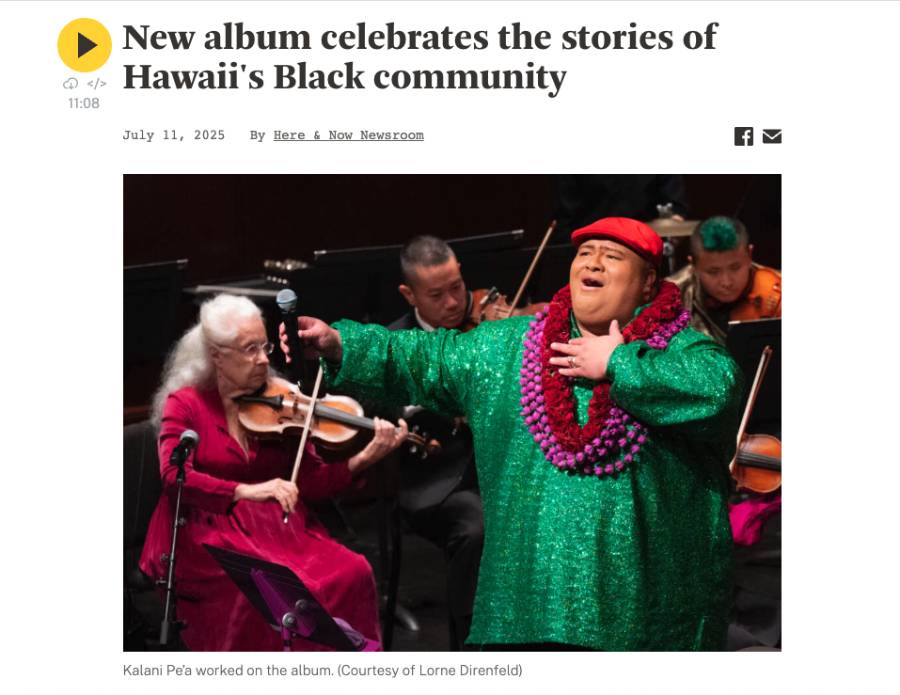
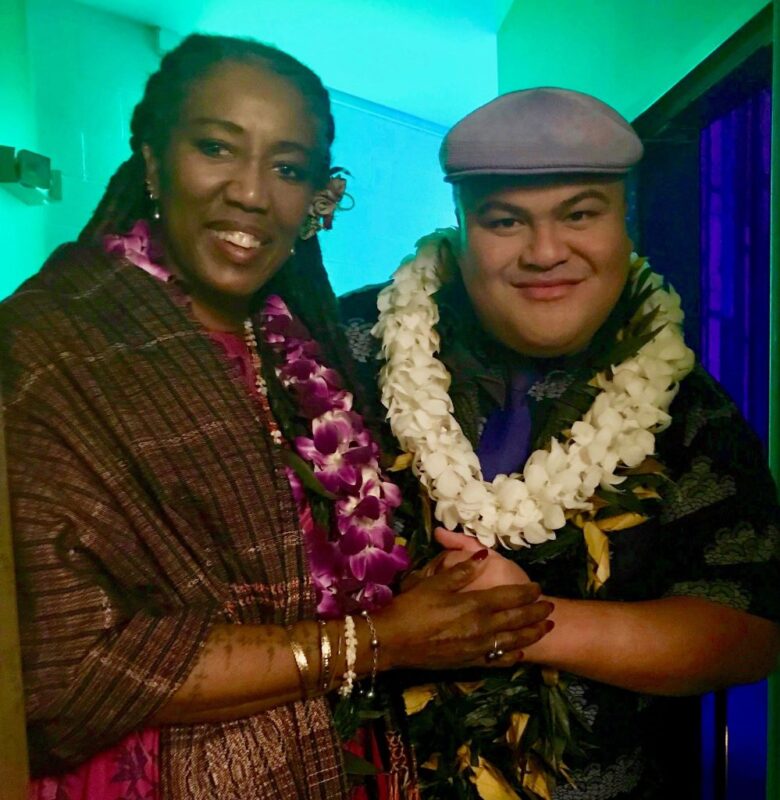
Kalani Peʻa: “We connected instantly on Facebook and made sure we hālāwai (met) in San Francisco for my debut sold out concerts at Freight and Salvage in Berkeley in 2019 and again in 2022. Mahealani taught my original mele (songs) to her students and we just did shows from there. I was able to invite Kumuhula Mahealani Uchiyama for my sold out concert at the prestigious Green Music Center in Sonoma, CA in 2019, Montalvo Arts Center in Saratoga, CA in 2023 and Carmel by the Sea and Grand Theatre in Tracy, CA earlier this year. We have collaborated and shared Mele Hawai’i all over California and can’t wait to help kickoff this gorgeous CD Release concert for Mahealani and her hālau.”
This project has been called "a celebration of the African experience in Hawai‘i." I bet many people don't know about this history! What are/were some of the primary immigration pathways that led Africans all the way to Hawai'i? What is the community like today?
In the period of time immediately following the arrival of the first ships from Europe, more followed with mariners from the Atlantic world, including those who were enslaved or emancipated from enslavement. These individuals found themselves welcomed in Hawaiʻi and stayed because of this sense of safety. Years later, other individuals migrated from the American West coast and parts of Africa and the Caribbean in pursuit of opportunities that were denied them on the American Continent.
In many of these cases, they not only found sanctuary, but also thrived in their new home. They were welcomed in the Royal Court, became physicians, lawyers, doctors, scholars, teachers, and of course, every day citizens.
During the sugar industry era, there was a concerted effort among some of the plantation owners to discourage the migration of more Black people to Hawaiʻi. Currently, there is a relatively small population of Black people in Hawaiʻi, many of whom are there because of the military. There is and has been a consistent population of African descended people living in Hawaiʻi.
What is the mele inoa tradition and why did you choose these kinds of songs as the means to honor the African experience in Hawai'i? How did you choose the individuals who are included on this album?
Mele inoa (name songs) are a core part of Hawaiian musical and historical tradition. It is a commemoration through song, of an individual and their attributes. As this is something that, in Hawaiian oral tradition, can live on beyond the lifetime of the subject, it is considered the highest honor that one can bestow or receive. It is this deep honoring that compelled me to want to create mele inoa for these individuals.
There were and are so many noteworthy people in this history. When I approached my esteemed colleagues with the idea, I forwarded to them a list of individuals I was researching along with a short blurb about their stories. Some were drawn to one of these stories. Others, such as my friend Kalani Peʻa, felt compelled to write from his own personal experience of a dear friend, Kamakakēhau Fernandez (himself a featured composer on the album.)
Kalani writes: “You are loved Kamakakēhau Fernandez. For your mama, for your ʻohana Naeʻole raising, nurturing and loving you. From your African Roots, being adopted by the ‘ohana Nae’ole and Fernandez, to your Hawaiian music and Hawaiian immersion language education upbringing.
This mele honors you.
The Kaona (veiled meaning) of this mele also exemplifies in his name. “As a dewdrop strikes one’s eye”- meaning Kamakakēhau being the Pua (flower) drifting ashore (coming from Arkansas to Hawai’i), his mother and family sheds that tear, that “dewdrop” to hānai, rear, nurture and love this exquisite African American baby who later became a voice of our lāhui through music and perpetuating ‘Ōlelo Hawai’i.”
For myself, I was drawn to three stories in particular. The first was that of Betsey Stockton, a woman born in slavery who taught herself how to read and was among the first missionaries to Hawaiʻi. She focused on teaching the children of the common folk (as opposed to the children of the chiefly class). She was also the very first woman of African descent in Hawaiʻi. Of course, she would be the first to receive a song!
Then I was drawn to write about Alice Ball, a young chemist who developed the first successful treatment for those suffering from Hansenʻs disease (leprosy). Ball was also the very first African American and the first woman to graduate with an M.S. degree in chemistry from the College of Hawaiʻi (now known as as the University of Hawaiʻi) Tragically, she died at the young age of 24, and it was not until years after her death that she received the proper credit that she deserved.
My third song for this project was inspired by a childhood memory of a photo of Reverend Dr. Martin Luther King wearing a lei during his third march on Selma. (I was old enough to remember that these things were happening but not old enough to understand why. All I knew was that I really wanted to know how to get a necklace of flowers like they were wearing. It led to my interest in Hawaiʻi and Hawaiian culture.) On researching this, I learned that Reverend Martin Luther King Jr. once addressed the Hawaiʻi State Legislature in the throne room of ʻIolani Palace. Kingʻs words that day were remarkably similar to those spoken by Queen Liliʻuokalani during the over throw of the Hawaiian Kingdom. Reverend Akaka was present that day and was inspired to have his parishioners of Kawaiahaʻo Church craft plumeria lei to send to King for his March on Selma as a sign of solidarity and hope.
Musically, of course, the ukulele is central to those of us in "the lower 48" understand of Hawaiian music, and it's utilized all over this record. As a Hula master, will you please share a bit more about the connection between music and dance, as well as how that informed some of the musical choices on Pōpoloheno? What other musical influences helped shape this record? (e.g., there's a cumbia!)
First, I must say that I do not consider myself a “master” of the hula per se, but a Kumu Hula (hula teacher) who does try her very best to uphold the tradition I was given and to teach it to the students who have entrusted me.
That said, in Hawaiʻi, there can be no dance without narration, lyric or prayer. The word is primary, and the movement is there to embellish the lyric. Hula is essentially the physical manifestation of the song being presented. It is not thought of as something distinct from the word, and cannot exist in the absence of it.
This is why it was so important to seek these renowned voices in the creation of Pōpoloheno. The hope is that their beautiful words and melodies will inspire dance to appear.
Indeed, project composer Kaulike Pescaia was drawn to write about the famous “Hula Cop” Peter Hose whoʻs family immigrated to Hawaiʻi from Cape Verde, an island off the North Western coast of the African continent. He did considerable research and created this lovely (and I feel irresistible) mele utilizing cumbia rhythm!
Of course, we have the contribution of Hawaiʻiʻs “First Lady of Jazz” Azure McCall, in her mesmerizing autobiographical song “I Am Where I Belong”, delivered with her full jazz orchestra in her unique vocal styling.
Otherwise, I allowed myself the freedom to use more rhythm and blues vocal expression on the two songs I led, more so than I usually would when singing in the Hawaiian language. It only seemed right.
It's come to light that the National Endowment for the Arts funding that originally begat this project will no longer be delivered because of the current administration. How can people support you and Pōpoloheno: Songs Of Resilience And Joy? Why does this history — and this present — need to be remembered and shared?
We did have our funding from the NEA rescinded with this note: “Pursuant to the Offer letter, the tentative funding recommendation for the following application is Withdrawn by the Agency and the National Endowment for the Arts will no longer offer award funding for the project.
The NEA is updating its grantmaking policy priorities to focus funding on projects that reflect the nation’s rich artistic heritage and creativity as prioritized by the President. Consequently, we are terminating awards that fall outside these new priorities. Your project, as noted below, unfortunately does not align with these priorities.”
And with that, we joined the long list of artists, educators and institutions who are being defunded.
We started a GoFundMe to help offset the lost money, and that can be found at https://www.gofundme.com/f/help-us-complete-the-creation-of-popoloheno
I strongly feel that there are many commonalities between Hawaiian and Black culture, such as the veneration of ancestors, our relationship with nature, the misappropriation of our cultures, and shared negative experiences (including extrajudicial killings, separation from ancestral lands, and more). Both groups live at the margins of mainstream culture. Both groups have in contemporary times developed truncated views of each other based on media misrepresentation and the commodification of our respective cultures. There is a bigger and longer history here than we have been given to understand.
It is my hope that Pōpoloheno will contribute to the conversation between African American and Kanaka Maoli and that we will appreciate that we have more in common than we may know.
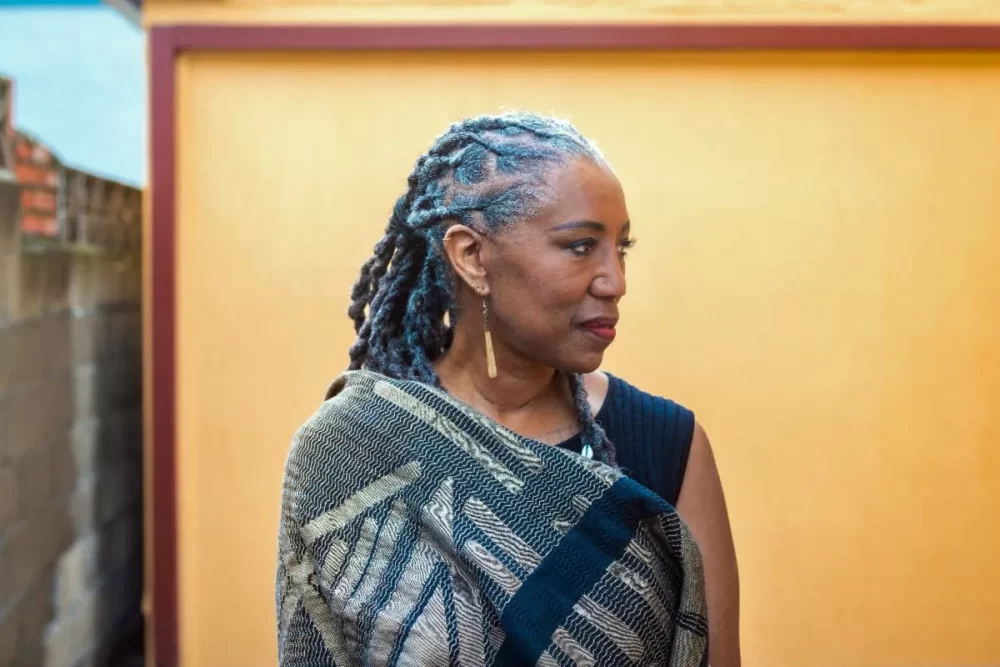
Caribbean Life
Hawaii’s first Black Hula Master honors MLK’s Historic March with new song
May 06, 2025
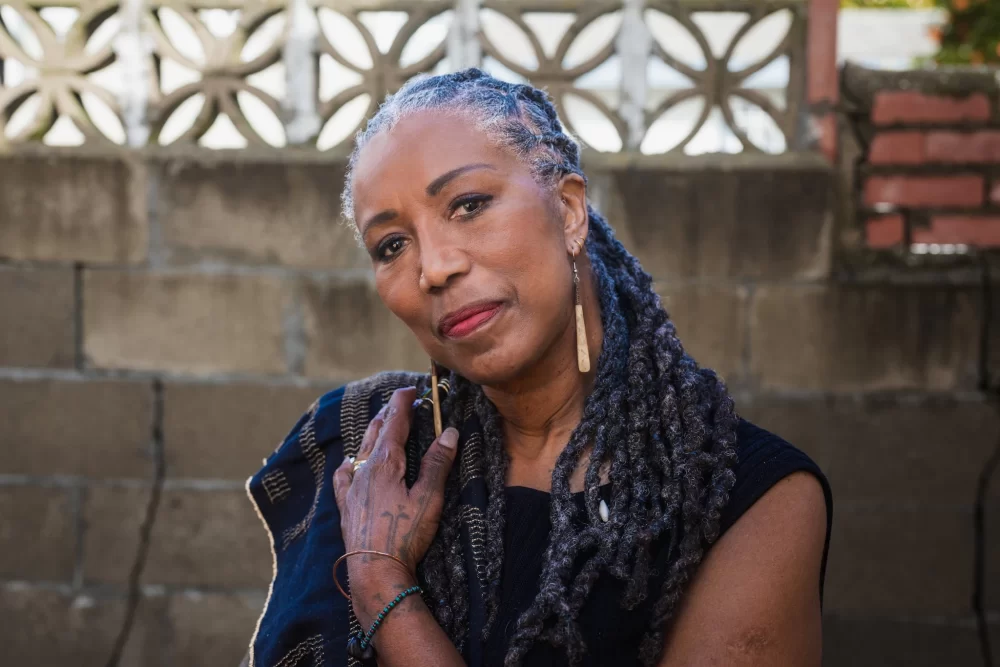
Hawaii Pubic Radio
Composer’s new album celebrates the histories of Black and Hawaiian communities
Feb 27, 2025